







Search Results for: promotional misunderstandings
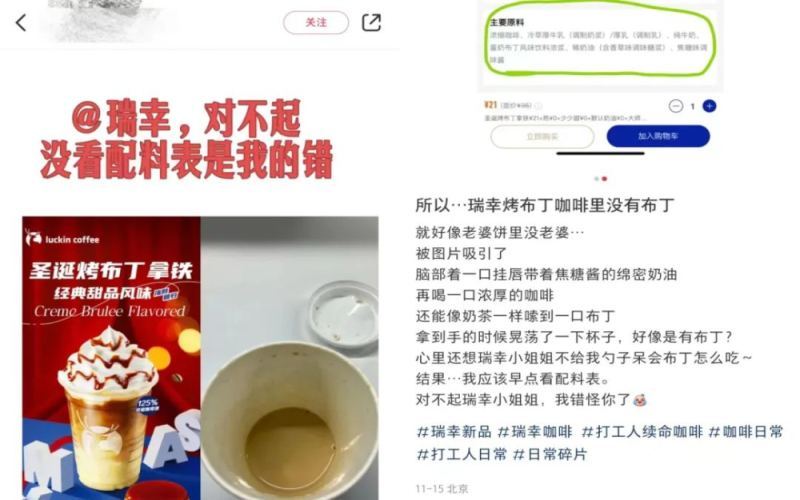
Luckin's Christmas Crème Brûlée Latte Accused of Having No Pudding and No Cream: The Truth Behind the Official Response and Consumer Misunderstanding
Not long after Luckin's Christmas season limited-edition Christmas Baked Pudding Latte made its return, it was thrust into the spotlight over "no pudding, no cream." Consumers questioned that its promotional images were tempting but misleading, while the company responded that "pudding" refers only to the flavor, and that the cream melting is a normal phenomenon. Behind this misunderstanding, is it misleading product naming and imagery, or consumers' cognitive bias about the characteristics of cream in hot drinks? This article sorts out the ins and outs of the incident and reveals the scientific reasons why cream easily melts when added to hot drinks, helping coffee lovers view this festive special drink rationally. [more…]
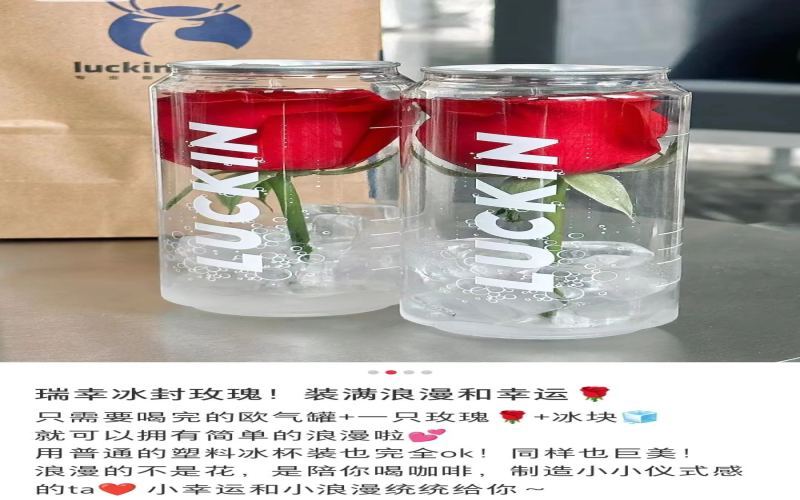
Luckin's "Frozen Rose" Gimmick Sparks Controversy: Employees Worry Customers Will Misunderstand That Stores Can Make It
Luckin Coffee recently posted a romantic tutorial on social media, teaching everyone how to make a "Frozen Rose" using a Luckin can or an ordinary ice cup, sealing a rose and ice cubes inside the cup to create an eye-catching decoration for the office desk. This玩法 quickly triggered netizens to imitate and like it, but it also worried baristas in stores—because this玩法 is not an official product, and if customers come to the store asking for it to be made, it may cause misunderstandings and negative reviews. The popularity of flower cups can be traced back to netizens' creativity, and was later boosted by brands such as Mixue Bingcheng and Haidilao to become a traffic code. Front Street Coffee noted that although similar marketing can bring heat, it needs to balance the execution pressure on frontline employees. [more…]
Legal Interpretation of the Luckin Low-Price Order Incident: Consumer Red Lines and Platform Liability Under System Vulnerabilities
The unusual pricing incident involving Luckin Coffee's delivery platform packages has drawn widespread attention. After consumers placed orders at extremely low prices, their orders were unilaterally cancelled, giving rise to legal disputes. Citing the views of a legal blogger, the People's Court Daily pointed out that when a merchant's pricing error results from staff mistakes, the merchant may claim a major misunderstanding to rescind the contract, but this must be resolved through litigation or negotiation. Ordinary consumers who unintentionally buy low-priced drinks have not broken the law, but those who knowingly exploit a system loophole and maliciously place large numbers of orders may run afoul of the law. This article will analyze the course of events, the legal basis, and Luckin's compensation measures in detail, while reminding coffee lovers that when enjoying discounts they must hold fast to the bottom line of good faith and avoid crossing the red line of the law. [more…]

Luckin's limited-edition collab cups were promoted as being different from reality, leaving consumers in many places going home empty-handed and sparking heated discussion.
Luckin Coffee's recently launched co-branded limited-edition takeaway cups have sparked widespread discussion on social media. Some consumers reported that after seeing promotions in livestreams and placing orders, they were told upon arriving at stores that the limited-edition cups were out of stock and would not be restocked, leaving them to accept ordinary cold drink cups instead. In Hainan, Jilin, and other regions, plastic ban policies prevented the use of these injection-molded cups, yet official channels continued to display promotional images, causing customers to make futile trips to stores. In addition, issues such as the absence of notices in the promotions indicating limited quantities and the failure to promptly update promotional images after stores ran out of stock left both consumers and store employees frustrated. Front Street Coffee notes that this incident reflects shortcomings in the brand's management of peripheral materials and promotional standards. [more…]
Are freeze-dried coffee and freshly ground coffee powder the same thing? A full analysis of instant coffee shelf life
In recent years, freeze-dried coffee has been gaining strong momentum and has become a popular category in the instant coffee sector. However, Front Street Coffee has noticed that many consumers hold considerable misconceptions about freeze-dried coffee—some mistake freshly ground coffee powder for freeze-dried coffee and brew it directly, while others believe that the quality of freeze-dried coffee is already on par with freshly ground coffee. These misunderstandings arise partly because the appearance of freeze-dried coffee blocks does bear some resemblance to freshly ground coffee powder, and partly because merchants often promote it as "comparable to fresh ground," further blurring the line between the two. In fact, freeze-dried coffee and freshly ground coffee belong to completely different product categories and have no basis for direct comparison at all. This article will start from the production process to clarify the essence of freeze-dried coffee and explore the differences in shelf life between coffee powder and instant coffee. [more…]
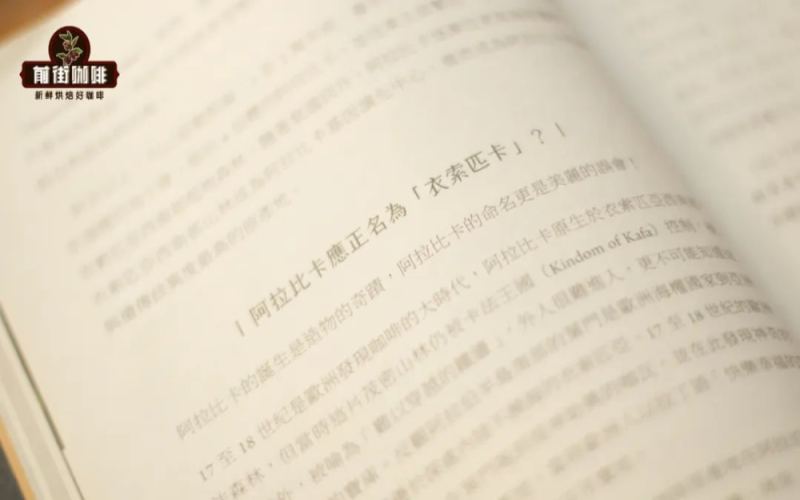
What Misunderstandings Lie Behind the Name Arabica? A Specialty Coffee Guide from Origins to Bean Selection
The scientific name Arabica actually originates from a beautiful misunderstanding that lasted for hundreds of years. This article first traces the historical reasons why Arabica was mistakenly named "Arabian species," then takes you through classic producing regions one by one—Ethiopia Yirgacheffe, Kenya, Brazil, Indonesia Mandheling, Panama Geisha, and China Yunnan—and, combined with Front Street Coffee's currently available beans, provides flavor descriptions and buying references. Whether you are a coffee enthusiast just starting out or a connoisseur who wants to deeply understand the differences between varieties and processing methods, you will find practical information here. [more…]
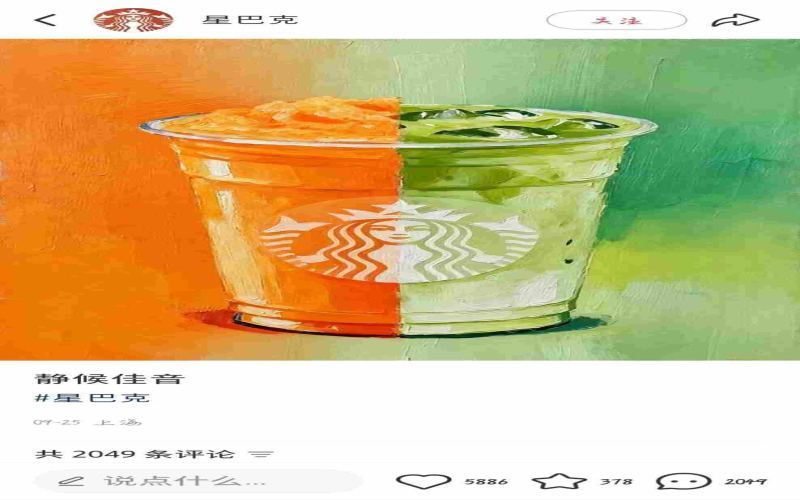
Starbucks posted a poster that sparked speculation about a collaboration, leaving fans excited for nothing—so what's the truth?
On the eve of National Day, Starbucks China posted a vividly colored beverage poster on Xiaohongshu with the caption "Waiting for good news," which happened to closely resemble the color scheme of Taylor Swift's new album teaser poster. This coincidence quickly ignited the expectations of Swifties, with many speculating that the two sides would collaborate again. However, after the stores launched two customized drinks as scheduled on October 3, staff said there was no collaboration, leaving fans greatly disappointed. What exactly caused this misunderstanding? And what history of cooperation has there been between Starbucks and Taylor Swift? This article will recount the whole incident and discuss the polarized views fans have on the matter. [more…]
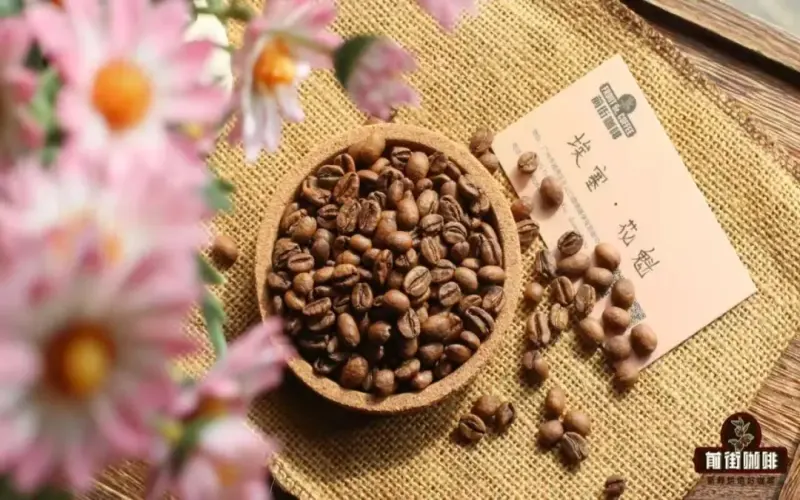
Ethiopian Sidamo Sun-Dried Huakui | Single-Origin Coffee Bean: Are Huakui, Gesha, and Geisha the Same Coffee Variety? What Is the Difference Between Huakui and Geisha?
If a customer is looking for the most cost-effective coffee beans, then Huakui is definitely one of Front Street's top recommendations. But whenever Front Street mentions Huakui, some customers will say something like: "Oh, I know Huakui—it's a variant of Geisha / a variety of Geisha!" As you can see, even today there are still many people [more…]
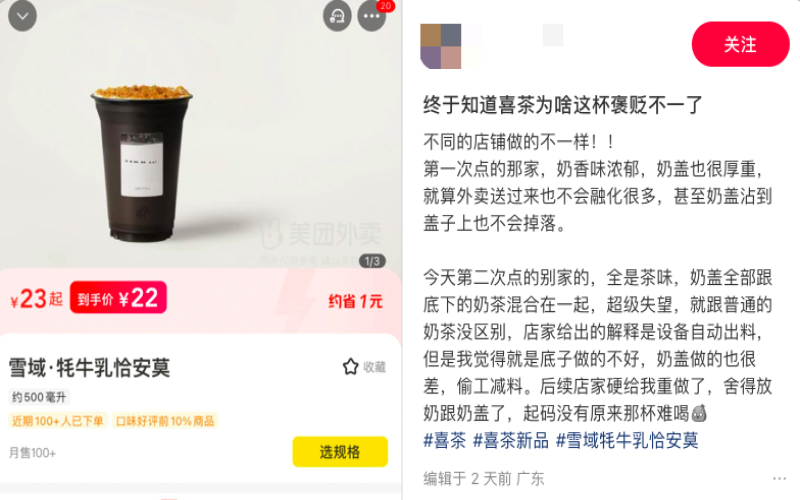
HEYTEA's Yak Milk Qia'an Mo was reported to have had its recipe adjusted the day after launch, with consumers noting a clear difference in flavor before and after.
Heytea's limited-time new product last month, Yak Milk Chaanmoo, quickly became popular thanks to the unique flavor of Tibetan yak milk, but was in short supply due to scarce ingredients. However, recently many repeat customers have found that the drink tastes very different from when they first tried it—the milky aroma has become weaker and the tea flavor more prominent. When verifying with store employees, they unexpectedly got the answer that "the recipe was changed on the morning of the second day after launch." Employees also revealed that further fine-tuning was done afterward. This silent recipe change has sparked consumer dissatisfaction, as they believe the actual taste does not match the promotional claims and that it may cause store employees to bear the misunderstanding of "cutting corners." [more…]

A Detailed Guide to Ethiopian Coffee Varieties: What Exactly Does Heirloom Native Species Mean?
When buying Ethiopian single-origin coffee, the "Heirloom" commonly seen on packaging often leaves people puzzled. It is not a specific variety, but a collective term for the vast number of native Arabica varieties in the region. As the birthplace of coffee, Ethiopia has thousands of natural variants, and many producing areas even grow dozens of varieties mixed together, making it impossible to classify them one by one. This article will take you through Front Street's perspective to understand the true meaning of Heirloom, its relationship with flavor, and the stories of specific varieties such as JARC numbered varieties, Geisha 1931, Gori Geisha, and Wush Wush. [more…]
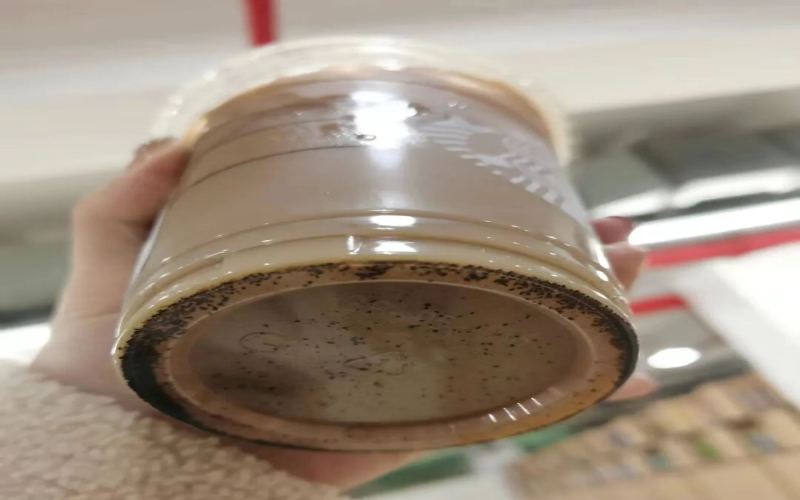
Starbucks Salted Flat White Leaves Black Powder Residue at the Bottom of the Cup, Staff Clarifies: Having Powder Is the Standard Serving
Starbucks has clearly picked up the pace of new product launches this year. Before people have even had a chance to check in on the cherry blossom limited edition, the Salted Flat White has already taken over as the store's main promotion. However, this new product has sparked controversy because of black powder residue left at the bottom of the cup, with many consumers suspecting that staff had made an operational error and mixed in coffee grounds. Faced with complaints, Starbucks staff collectively protested their innocence—having coffee powder is actually the correct method, and not having it would instead be a violation. What exactly is going on here? Why is the freshly ground coffee powder used for decoration so often mistaken for extraction residue? And why do consumers have so many complaints about the taste? This article will reconstruct the whole incident and analyze the gap between the standard recipe for this beverage and the consumer experience. [more…]
Indonesian Mandheling Coffee Flavor Analysis: Differences in Origin, Processing Method, and Brewing Between Golden Mandheling and Lintong Mandheling
Mandheling is the most iconic coffee from Sumatra, Indonesia, known for its full body, smoky aroma, and low acidity. This article begins with the historical misunderstanding behind its name, then explains how the unique wet-hulling process of Mandheling coffee beans shapes their herbal aroma and thick texture, and compares the positioning differences between the two beans sold by Front Street Coffee: Golden Mandheling (Aceh region) and Lintong Mandheling (Lintong region). The article also includes recommended brewing parameters from Front Street Coffee baristas for medium-dark roasted Mandheling, including a KONO dripper, 88°C water temperature, a 1:15 coffee-to-water ratio, and a staged pouring technique, helping coffee enthusiasts gain a more complete understanding of this traditional flavor. [more…]
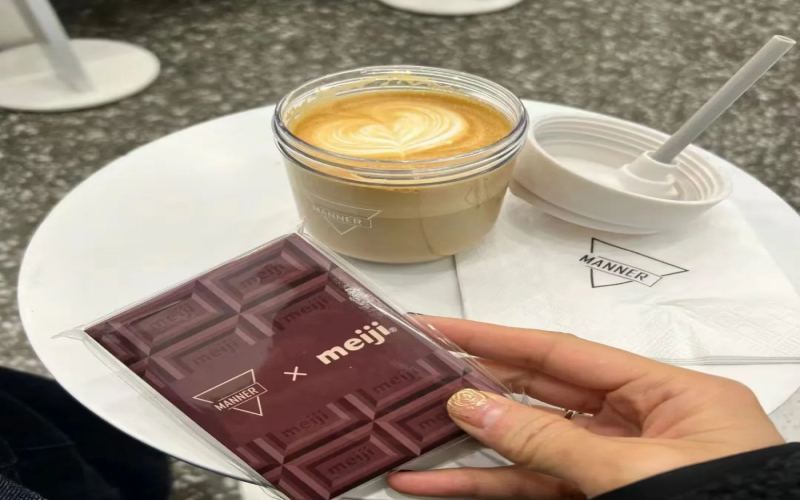
Manner quietly gives away Meiji chocolate offline, low-key in-store promotion sparks consumer discussion
Recently, a customer buying coffee at a Manner store unexpectedly received a Meiji chocolate from the staff as a gift. This hidden perk, which had not been publicly promoted, quickly drew attention on social media. It is understood that consumers must purchase this week's SOE coffee through offline stores or the mini-program to receive it, and the quantity is limited on a first-come, first-served basis. Some staff were not very clear about the campaign rules, causing a few customers to fail to receive it as expected. Loyal Manner users pointed out that this is not the first time the brand has quietly given out chocolate, as a similar surprise also occurred earlier this year. Consumers have differing opinions on whether it should be publicly promoted, with some calling for greater transparency and others believing that keeping it a niche perk is more in line with the brand's original intention. [more…]
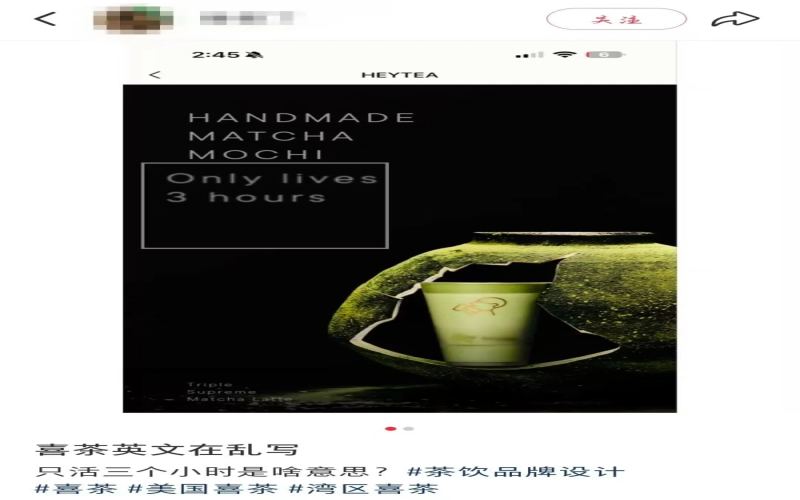
Heytea's new matcha product in the US sparks controversy over its English label—what does "only alive for 3 hours" actually mean? The official response is here.
Heytea has brought its popular matcha drink "Triple Thick Matcha" from China to the U.S. market, rolling out a limited-time buy-one-get-one-free promotion, but a small line of English text on the promotional poster—"only lives 3 hours"—sparked widespread discussion. The phrase, which literally means "only lives 3 hours," left many consumers puzzled: does it refer to the drink's optimal flavor window, the duration of the promotion, or the shelf life of the matcha mochi topping? Netizens each had their own interpretation, with some even questioning whether the brand's copywriting review process was inadequate. Hours after the controversy escalated, Heytea's official customer service contacted the original poster to explain, and the poster in question has since been corrected. This article provides a complete rundown of how the incident unfolded and the various viewpoints involved. [more…]

Tianjin milk tea packaging printed with the rare character "嬲" sparks heated discussion; merchant apologizes and destroys the relevant sealing film.
Recently, a milk tea brand in Tianjin trended on Weibo and sparked widespread discussion because the sealing film on its drinks featured the rare character "嬲 (niǎo)." Many netizens pointed out that in the Tianjin dialect, this character carries an indecent or even insulting meaning, making some consumers uncomfortable. Although the brand's original intention may have been to promote awareness of rare characters, the note on the packaging that it is "mostly used as a dirty word" further fueled the controversy. On May 4, the merchant publicly apologized and said it had uniformly destroyed the sealing films printed with the character and would no longer use them. As coffee lovers, Front Street Coffee also took note of this incident, reminding the beverage industry to be more cautious in packaging design to avoid misunderstandings caused by cultural differences or dialect ambiguity. [more…]
A Detailed Explanation of Colombian Green Coffee Grading Standards: Does the Supremo Grade Represent the Highest Quality?
Colombia, as the world's second-largest producer of Arabica coffee, offers ideal conditions for coffee cultivation thanks to its unique geography of low latitude and high altitude. However, many people misunderstand Colombia's coffee grading system—does the highest grade, Supremo, really represent the best-tasting coffee? This article provides a comprehensive analysis of Colombian coffee, from its growing regions, cultivated varieties, and processing methods to its grading system, and introduces the Colombian specialty coffee beans sold by Front Street Coffee (FrontStreet Coffee) along with roasting and brewing recommendations, taking you deep into the true face of this major South American coffee country. [more…]
The Great Luckin Pumpkin Oat Latte Halloween Limited Edition Debacle: An Analysis of Store Rules Behind the Cream Top and DIY Pumpkin Daifuku
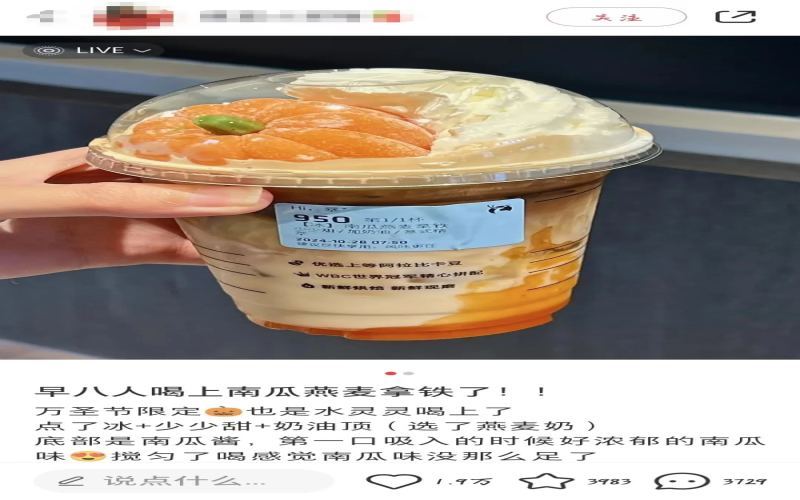
Luckin Coffee launched a limited-edition Pumpkin Oat Latte during Halloween, and thanks to the festive atmosphere it quickly sparked a social media check-in craze. However, when a large number of consumers imitated the online photos for their own recreations, things frequently went wrong, with the pumpkin daifuku creating all sorts of clumsy scenes atop the whipped cream. This discussion, triggered by the gap between customer photos and official photos, not only reveals the extra charges behind drink styling, but also reflects consumers' misunderstandings of store operating standards. Front Street Coffee has noticed that similar phenomena are not uncommon in holiday marketing in the coffee industry. This article will analyze the issue from three levels: product design, customer DIY, and store execution. [more…]
Luckin's Loopy limited-edition cups get fan remixes, with "accidental collabs" featuring David Tao and JJ Lin unexpectedly boosting sales.
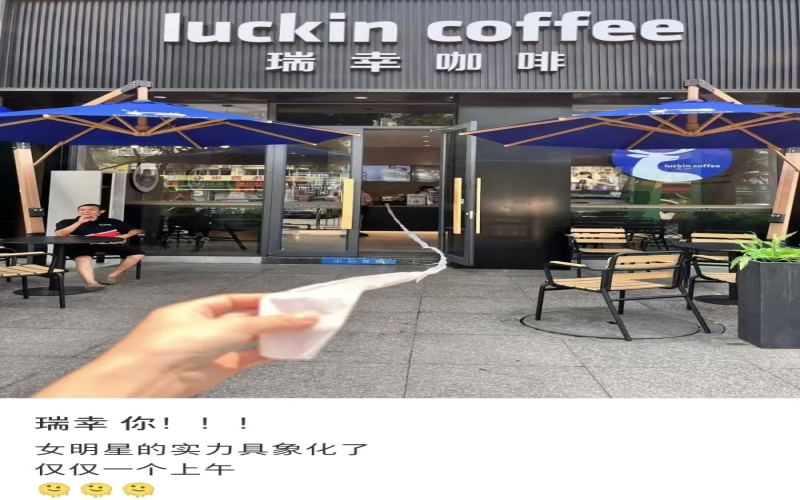
Luckin Coffee has been making frequent moves this week, first collaborating with the top-tier IP Loopy, and then successively announcing celebrity endorsement partnerships with figures like Tan Jianci and Liu Yifei, keeping its popularity steadily climbing. However, what truly set social platforms abuzz was a wave of "secondary creation" spontaneously sparked by music fans—some netizens took the Loopy limited-edition hot drink cups launched last week and used markers to draw slanted bangs or blunt bangs on the little beaver, which unexpectedly made it look like David Tao and JJ Lin, quickly prompting a large number of fans to follow suit and show off their own "limited-edition collaboration cups." This mix-up not only had fans having a great time but also unexpectedly boosted sales of the limited-edition cups at Luckin stores. This article takes you through this amusing event, from misunderstanding to carnival, to see how fans used a single pen to turn coffee cups into "Mandopop collaboration editions." [more…]
Chayan Yuese's tweet headline was criticized as negative and sparked controversy; the company apologized and deleted the article.
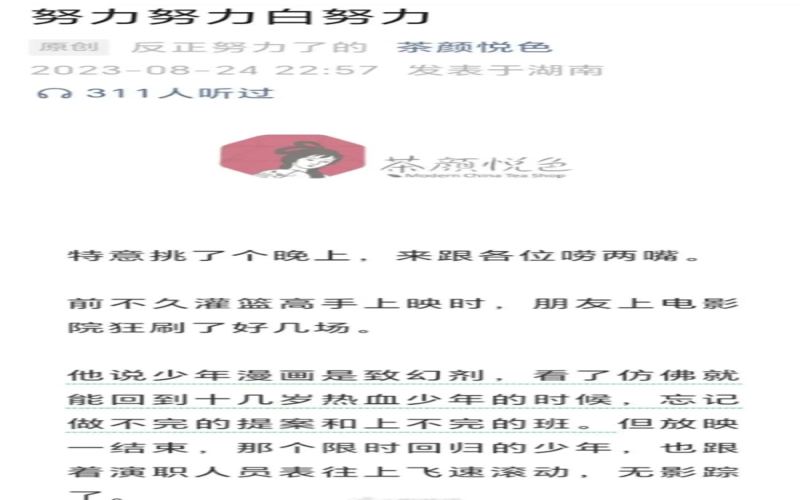
On August 24, the Tea Yan Yue Se official WeChat account published a post titled "Hard Work, All in Vain," using Slam Dunk as an introduction to explore the differences between youth and adults, and to promote its new product "Young Zhuangzi." However, the negative sentiment conveyed by the title sparked widespread dissatisfaction among netizens, who felt it deliberately provoked anxiety among young people, and the related topic quickly trended on Weibo. Tea Yan Yue Se subsequently responded in the comments section, saying its original intention was to express that hard work may not be rewarded but the process is worth cherishing, and apologized for the inappropriate title, ultimately deleting the post. This was not the first time Tea Yan Yue Se sparked controversy over its copywriting; it had previously apologized over a "misogyny controversy" and the English name "SexyTea" incident. [more…]

Must Dirty Coffee Use IceBock? An In-Depth Analysis of Its Taste Differences from Latte and Key Production Points
Dirty coffee is loved by many coffee enthusiasts for its layered visual effect and unique drinking experience, but there is often a misconception about whether it must be made with ice-bock milk. This article will sort out the origin and characteristics of Dirty coffee, compare its differences from iced latte in terms of ingredients and taste, and introduce the principles of ice-bock technology and its application in the coffee field. At the same time, regarding the selection of different coffee beans, it provides pairing suggestions related to the Front Street brand to help readers understand why ice-bock is more compatible with Dirty, as well as flexible ways to adapt it in actual preparation. [more…]